Recent advances in catalysts for direct synthesis of cyclic carbonates from olefins and CO2
Qilu HU, Guoying ZHAO, Caihong YU
The Chinese Journal of Process Engineering
2021, 21 (
7):
762-773.
DOI: 10.12034/j.issn.1009-606X.220195
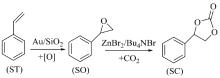
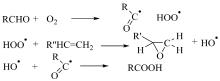
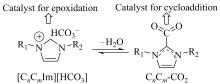
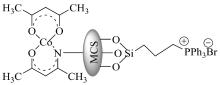
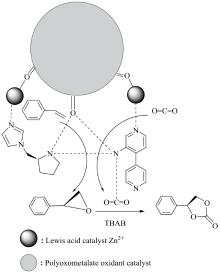
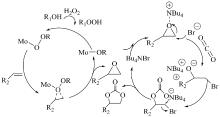
The valorization of CO2 into value-added chemical compounds via economically viable process could be one of effective strategies to reduce CO2 emission and therefore the climate change impact. The cyclic carbonates are industrially produced by cycloadditions between CO2 and epoxides. However, there are safety risks in this technology due to the need to handle the flammable and explosive epoxides. Direct synthesis of cyclic carbonates from olefins and CO2 could provide a safer, more economic and environment-friendly alternative technology. Herein, the latest research progress in catalysts for synthesis of cyclic carbonates via one-step oxidative carboxylation, sequential oxidative carboxylation and hydroxyl bromide carboxylation of olefins is summarized. The reported catalysts for oxidative carboxylation approach are mainly multi-component composite catalysts, of which include at least both catalytic components for epoxidation of olefins and carboxylation with CO2. Single component catalysts with catalytic active function or site for both epoxidation of olefins and carboxylation with CO2, have been rarely reported in the literature and are also described here. The catalysts for hydroxyl bromide carboxylation of olefins typically consist of a halogenating reagent and an inorganic/organic base deprotonating reagent. The effects of reaction approach, catalyst structure/components, catalytic mechanism and reaction conditions on the yields and selectivity of CC are also systematically summarized and explored. In the view of green chemistry, oxidation carboxylation of olefin is of higher atom-economy and environmental benefits while hydroxyl bromide carboxylation is always accompanied by the formation of a large number of side-products. An efficient heterogeneous single component catalyst with integrated cooperative catalytic active sites for epoxidation, carboxylation, CO2 adsorption concentration, etc., which simplity the separation and recovery of catalysts and products, will be the future research trend of catalyst development for oxidative carboxylation of olefin with CO2 to produce cyclic carbonates.